

Retro Art Flooring
Classification:
Product Details
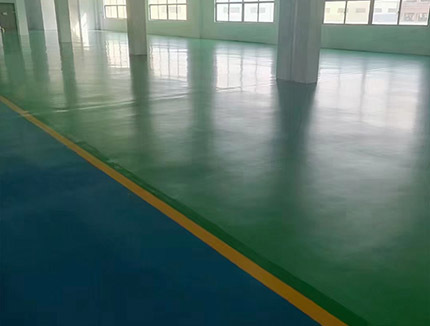
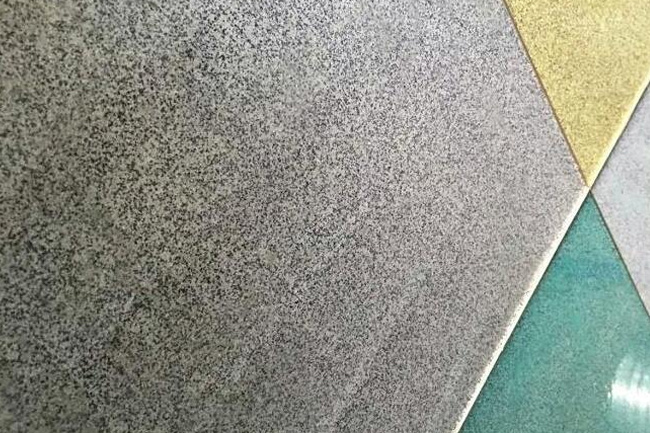
Retro art floor paint is a type of flooring material that can create realistic natural effects such as marble, slate, tiles, bricks, rocks, and pebbles on the surface of concrete by relying on floor hardeners, release powders, molds, professional tools, and retro art floor paint protectants during the laying of concrete. The colored surface layer is formed by pigments that have been specially treated and permeated into the concrete surface through retro art floor paint hardeners and blended formulations. The powdered retro art floor paint release powder is used to ensure complete coverage of the concrete surface during the stamping process, while also providing a second color that combines with the base color of the hardener, thus creating a natural and realistic effect. The spraying of the retro art floor paint protectant not only protects the concrete but also makes the color and pattern of the concrete more vibrant and eye-catching.
1. During construction, the retro art floor paint hardeners and release powders to be laid should be stacked and used in order according to the laying direction, and various professional construction tools and retro art floor paint molds should also be in good working condition.
2. Preparation work of various grades should be carried out according to the requirements for the concrete surface ratio.
The climate during construction has a significant impact on the quality of the work. The construction of retro art floor paint should avoid rain, snow, wind, sand, and freezing weather. In places with large temperature differences between day and night, construction should also be prohibited at night. A good construction environment is essential to ensure the quality of the work. During the construction of retro art floor paint, efforts should be made to avoid overlapping with other construction teams, and if necessary, closure measures should be taken at the construction site.
3. The construction of concrete must be carried out according to the construction drawings and design requirements, and the thickness of the concrete must be consistent, with the base layer being at least 5 cm or more.
4. The setting of expansion joints must be done according to design requirements and completed within 24 to 36 hours after laying the concrete, with a distance of no less than 4 meters between them. The height of the expansion joints is generally about 1/3 of the concrete surface.
5. The length of the concrete surface laid in each shift should be coordinated with the reasonable construction of the retro art floor paint. Especially in winter and rainy seasons, the construction length should be appropriately controlled.
6. The surface treatment of the concrete surface must be carried out according to regulations and design requirements, and the surface must meet the required flatness, cross slope, and width. The quality of the concrete must be consistent within the same project, which is very important for the overall consistency of the final effect.
7. Use a magnesium alloy trowel for retro art floor paint to smooth the concrete surface and take care of the edges.
8. The retro art floor paint hardener may clump during transportation, and it must be broken up by hand.
9. After waiting for the free moisture on the surface of the concrete to dissipate, use the retro art floor paint hardener and evenly cover the surface of the concrete by sprinkling, with a dosage of 3 kg/square meter.
10. The sprinkling of the hardener must be done in two passes, with the first pass being about 2/3 of the amount and the second pass about 1/3 of the amount. Each sprinkling must be smoothed into the concrete surface with the magnesium alloy trowel, and the hardener must be allowed to fully moisten before using the trowel.
11. After adding necessary hardener in areas deemed necessary, the retro art floor paint steel trowel must be used for the final smoothing and finishing after using the trowel.
12. When sprinkling the hardener, strictly follow the process requirements of retro art floor paint, and do not excessively scrape the concrete surface, as this will lead to surface water and weaken the color.
13. Do not sprinkle water on the surface of the concrete that has had hardener sprinkled on it, as this will lead to color inconsistency.
14. After the water has been absorbed and the second sprinkling of hardener is completed, the retro art floor paint release powder must be immediately and evenly sprinkled on the smoothed concrete surface, with a dosage generally around 2 kg/10 square meters. Without using release powder, the retro art floor paint molds cannot be used.
15. When the hardener and release powder have combined but have not yet fully set, the retro art floor paint molds can be used for stamping. It is important to study and formulate the arrangement and placement of the molds in advance to ensure the integrity of the pattern. The first mold should be laid along the reference line of the layout and pressed vertically into the concrete. The worker can stand on the mold, as their body weight is sufficient to create texture in the concrete surface. If necessary, a retro art floor paint mold tamper can be used to press the mold vertically into the working surface to better imprint a clear and realistic pattern. Mastering the timing of stamping is very important; too wet or too dry a concrete surface will affect the final pattern and effect.
16. Retro art floor paint molds should be used interchangeably, and the molds must be arranged closely to prevent double seams from appearing. After demolding, the pressed areas must be checked and appropriately repaired.
17. After pressing the mold according to the reference line, quickly remove the mold and systematically press all the concrete surface in order. If there are walls, corners, or other irregular areas during construction, retro art floor paint corner molds can be used, but care must be taken to ensure consistency and coordination with the overall pattern.
18. Molds and corner molds can be reused, but a sufficient number of molds must be prepared to improve construction efficiency.
19. Once the strength of the concrete surface reaches 70% of the design strength (usually the day after the stamping under most weather conditions), the surface can be cleaned. When rinsing, do not wash away all the release powder; about 20% of the release powder on the concrete surface can be retained. To keep the surrounding environment clean, a soft broom can be used to remove the release powder from the concrete surface first.
20. If necessary, a 5% diluted hydrochloric acid can be used for rinsing.
21. After the concrete surface is completely dry, a coat of retro art floor paint protectant with 30% solid content must be sprayed, with a dosage generally around 2.2 kg/10 square meters. The protectant can be sprayed using a roller or spray gun.
22. The retro art floor paint surface after construction does not need to be watered for curing, but necessary protective measures must be taken before acceptance and delivery for use.
Key words:
Artistic Flooring
Previous Page
Next Page
Online Consultation
Note: Please leave your email address, our professionals will contact you as soon as possible!